By TEMAXBD | Reading time: about 9 minutes | Written for fashion designers, product developers and clothing brands
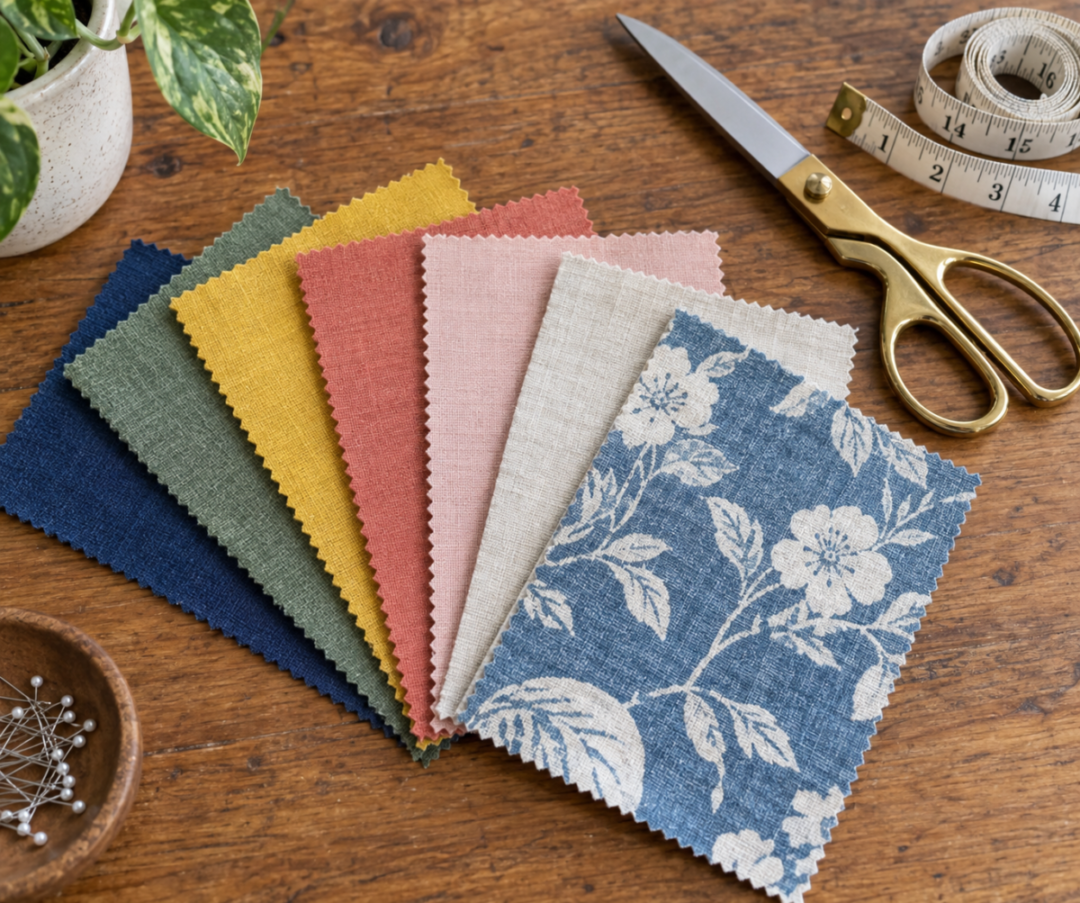
Fabric is the first thing your customer touches and the last thing they’ll forget. Think of it as the voice of your design: the right fabric makes your idea speak clearly, the wrong one makes it mumble.
It quietly shapes almost everything about the finished garment:
How it feels against the skin — soft, crisp, cool, or scratchy
How it drapes and moves on the body — flow or structure
How long it survives repeated washing — shrinkage, pilling, fading
How much it costs to produce — consumption, wastage, minimums
How your brand is perceived — premium, casual, sustainable, sporty
Picture a designer sketching a beautiful oversized shirt. The shape is perfect, the collar is perfect, the buttons are perfect. Then the first sample comes back stiff, wrinkly and a little scratchy. Nothing is wrong with the design — the fabric was the wrong choice. A design is the idea, but fabric is the body that makes the idea real. If you’re a fashion designer, a product developer or a clothing brand owner, that makes fabric one of the biggest decisions you’ll make, and the good news is you don’t need to be a textile engineer. You just need a clear process — this guide walks you through it, step by step, in plain language.

Before you touch a single swatch, answer three friendly questions:
A simple example: a school uniform shirt needs to survive hundreds of washes, so it must be tough and easy to care for. A party dress only needs to look gorgeous for a few nights, so drape and shine matter more. Same question, completely different fabric answer.
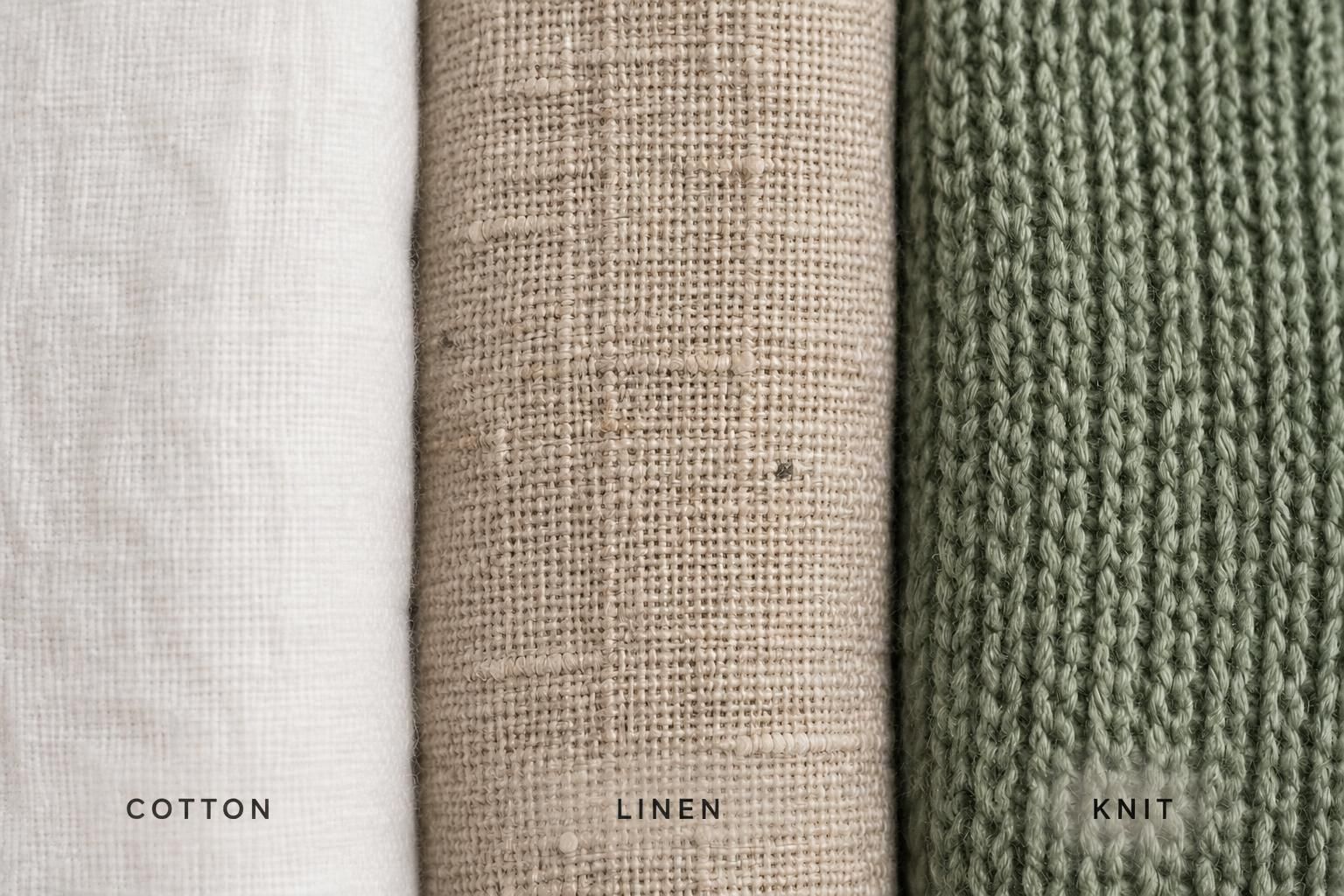
Think of fibers like ingredients in a kitchen. Each one has its own flavor.
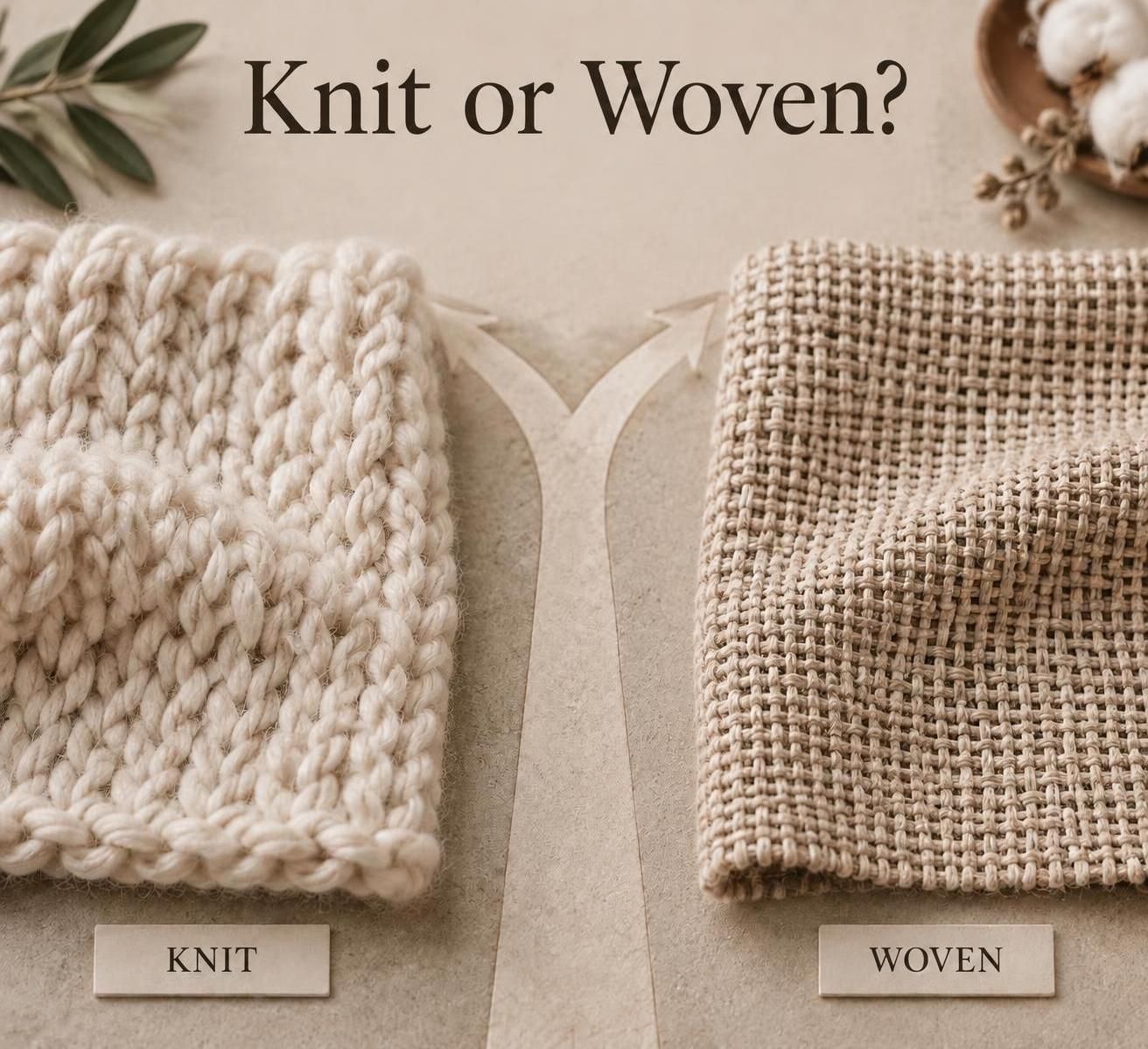
This is one of the most important choices, and it is easier than it sounds.
A quick rule of thumb: if the garment should feel soft and stretchy, start with knit. If it should look sharp and structured, start with woven.

GSM means grams per square meter. It simply tells you how heavy a fabric is. Imagine cutting a piece of fabric exactly one meter by one meter and putting it on a scale. That weight is the GSM.
Why does it matter? A higher GSM usually means a thicker, warmer and sturdier fabric. A lower GSM means lighter and more breathable. Here are typical ranges brands often work with (these can vary by supplier and fabric type, so always confirm with your mill):
| Garment | Common fabric | Typical GSM range |
|---|---|---|
| Lightweight summer t-shirt | Single jersey cotton | about 130–160 |
| Everyday t-shirt | Single jersey cotton | about 160–200 |
| Premium heavy t-shirt | Heavy jersey cotton | about 200–260 |
| Polo shirt | Pique cotton | about 180–240 |
| Hoodie / sweatshirt | Fleece or French terry | about 280–400 |
| Formal shirt | Poplin / twill | about 100–150 |
Denim is usually measured in ounces per square yard instead of GSM. Light denim is often 8 to 10 oz, and heavy denim is 12 oz and above.
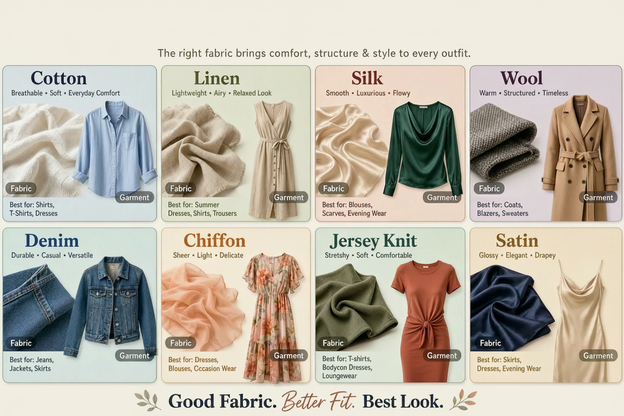
Here is a handy cheat sheet to help you shortlist fabrics faster:
| If you are making… | Good fabric ideas | Why it works |
|---|---|---|
| T-shirts | Combed cotton jersey, cotton-elastane | Soft, breathable, comfortable |
| Polo shirts | Cotton pique, cotton-poly pique | Textured, holds shape, easy care |
| Hoodies & sweatshirts | Fleece, French terry | Warm, cozy, good structure |
| Dress shirts | Cotton poplin, twill, oxford | Crisp, professional look |
| Trousers & chinos | Cotton twill, cotton-elastane | Durable, comfortable to move in |
| Jeans | Denim (with or without stretch) | Strong, classic, ages well |
| Activewear | Polyester-elastane blends | Quick-dry, stretchy, supportive |
| Summer dresses | Viscose, linen, light cotton | Airy, flowy, cool |
| Jackets & outerwear | Nylon, polyester, wool blends | Protective, structured |
This is a starting point. The right choice always depends on your customer, climate, price point and brand style.
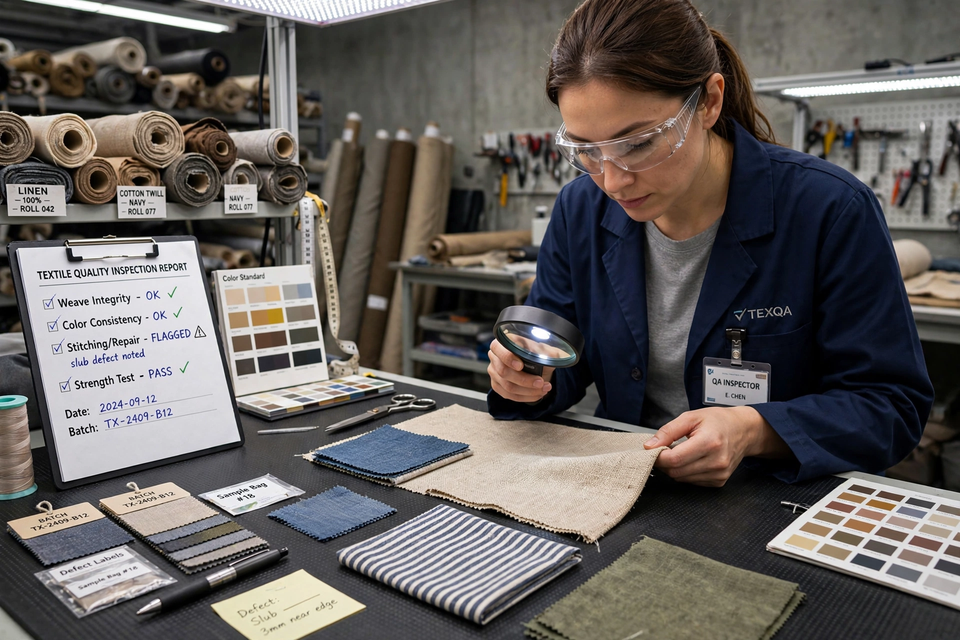
Two fabrics can look identical in a photo and still behave very differently. Ask your supplier about these:
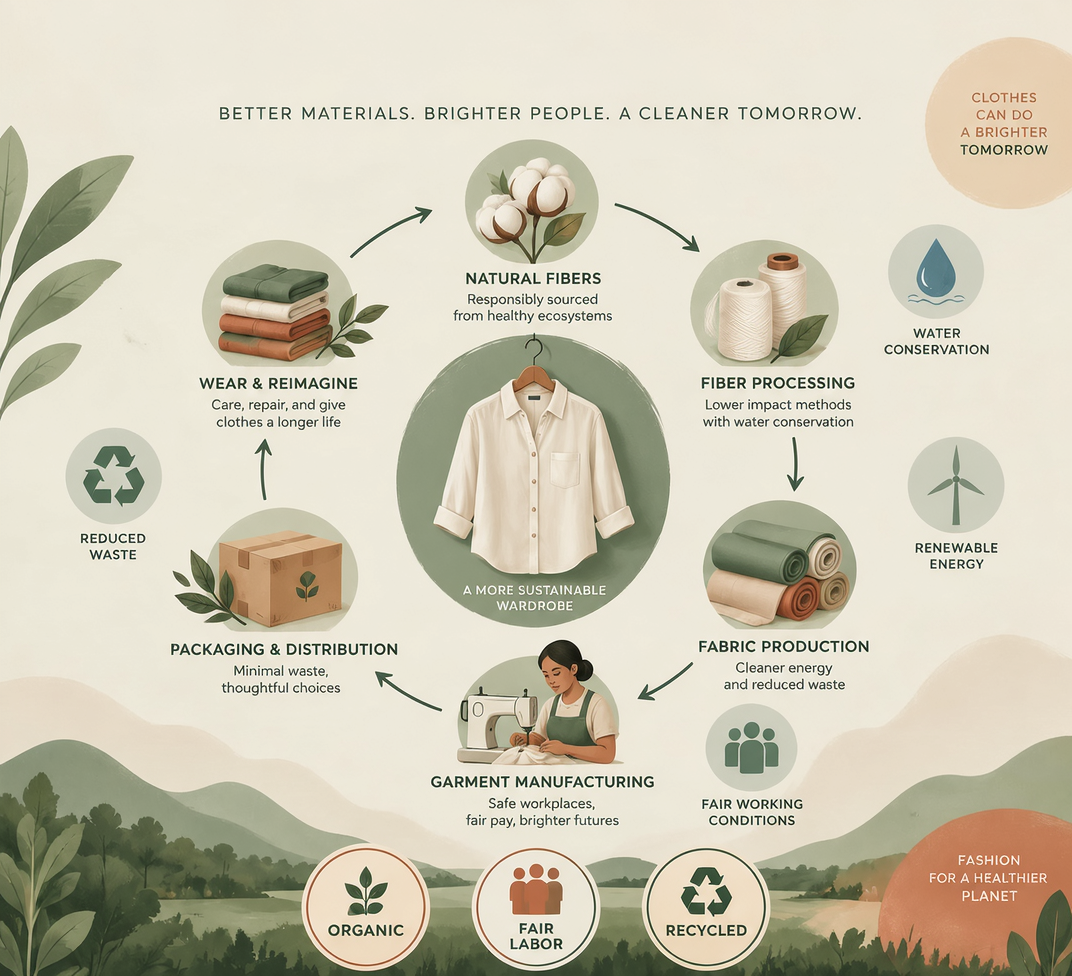
International buyers and customers care more and more about where clothes come from. You do not need to be perfect, but you should be honest and informed.
Some well-known options and labels to look into:
Ask suppliers for certificates and check that they are current. Real documents build real trust. And never use words like “eco-friendly” in your marketing unless you can back them up.
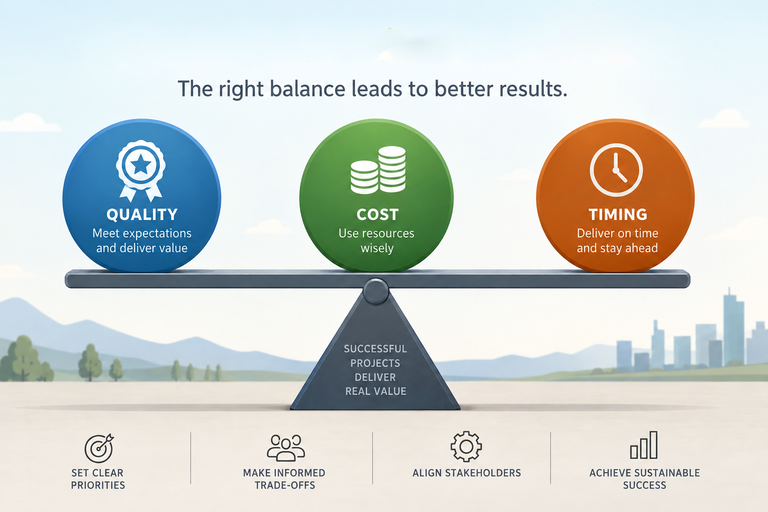
The best fabric on earth is useless if it blows your budget or arrives three months late. Before you fall in love with a swatch, check:
A good habit: cost the whole garment, not just the fabric. Cheaper fabric that causes returns and complaints is usually more expensive in the long run.
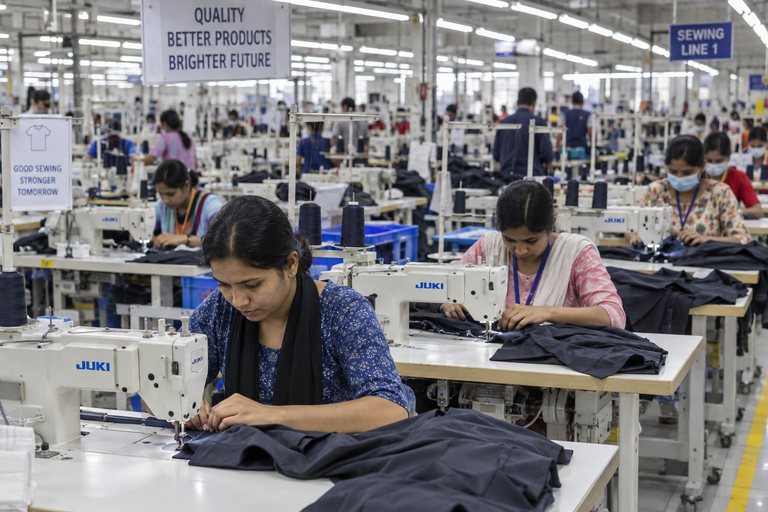
Never go straight from a catalog picture to bulk production. Follow this simple path:
This small extra effort can save you from very big, very expensive mistakes.
Copy this and keep it near your desk:
What is the best fabric for a clothing brand just starting out? Cotton and cotton blends are a friendly place to begin. They are comfortable, widely available and easy to work with, and many suppliers offer them in flexible quantities.
What does GSM mean in fabric? GSM stands for grams per square meter. It measures fabric weight. Higher GSM generally means thicker and heavier, lower GSM means lighter.
How do I know if a fabric will shrink? Ask your supplier for shrinkage information and always run your own wash test on a sample before bulk production.
Is polyester bad for clothing? Not at all. Polyester is excellent for durability, quick drying and activewear. It simply works best when chosen for the right purpose, and recycled versions are available.
How many fabric options should I test? Three to five is a good number. It gives you real choices without overwhelming your timeline or budget.
A good fabric supports your design, respects your customer’s comfort, fits your budget and keeps showing up for you season after season. Take your time, ask questions, test everything, and trust your hands as much as your eyes.
Choosing the right fabric is not about finding the “perfect” one. It is about finding the right one for your customer, your brand and your story.
Whether you are developing your first line or expanding an international brand, our team would love to talk fabrics, samples and production with you.
👉 Visit TEMAXBD and start the conversation and tell us about your collection.
WRITTEN BY
TEMAX Sourcing BD is one of the leading readymade apparel sourcing companies in Bangladesh with a reputation of quality, reliability and unparalleled customer service which started its journey in 2015.